
The dust of the Maswa District doesn’t just settle; it lingers, a fine, ochre powder that coats the leaves of acacia trees and the boots of those who walk the long paths between villages. For most travelers, this landscape is a blur seen through the window of a 4×4 on the way to the Serengeti. But for a growing number of visitors, the true heart of the journey begins where the national park boundaries end.
In 2004, a partnership was formed that challenged the traditional hierarchy of the African travel industry. It was born not from a boardroom, but from a Peace Corps mission. Brian Singer, having spent years witnessing the profound gap in educational resources in rural Tanzania, realized that tourism, often criticized for its “look-but-don’t-touch” approach to local communities, could be the most potent tool for systemic change. This was the genesis of Access 2 Tanzania.
The Bridge Between Two Worlds
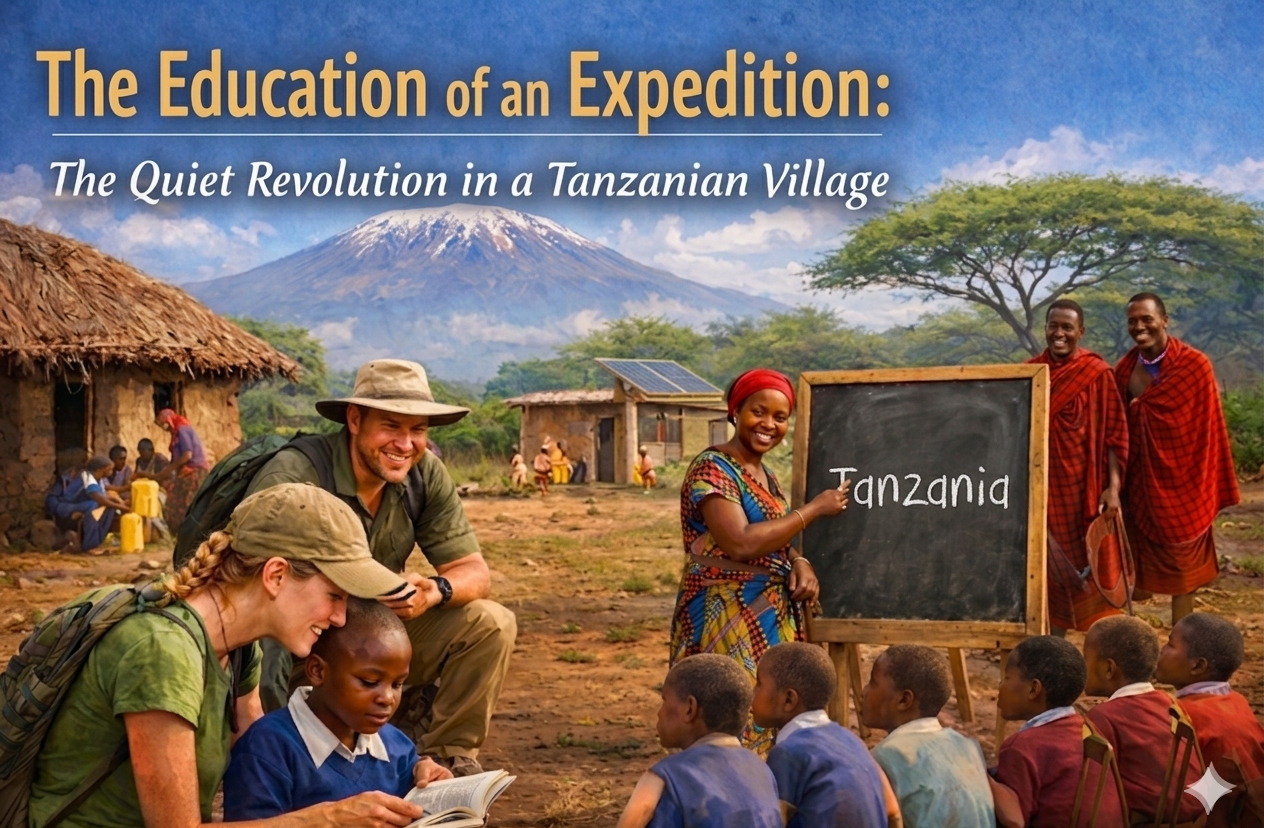
To understand the impact of this model, one must look at the Nyamatare primary school. Years ago, the facility struggled with crumbling infrastructure and a lack of basic supplies. Today, it stands as a testament to what happens when travel profits are decoupled from corporate overhead and reinvested into human capital.
The relationship is symbiotic. Access 2 Tanzania operates as the economic engine, while the non-profit Project Zawadi serves as the social heart. When we take guests into these regions, the interaction isn’t a staged cultural performance. There are no rehearsed dances or transactional photo-ops. Instead, there is the sound of a classroom in session, the sight of a new library being stocked, and the quiet pride of a community that is no longer a bystander to the industry operating in its backyard.
The Human Element
The guides who lead our expeditions are more than wildlife spotters; they are the primary storytellers of this evolution. Many of them come from the very regions the company supports. They don’t just point out a leopard in a sausage tree; they speak to the complex relationship between the local farmers and the wildlife that occasionally encroaches on their crops. They explain the nuance of land conservation and why a child’s education is the most effective deterrent to poaching.
One of our veteran guides often tells guests, “A safari ends when you fly home, but a school remains for fifty years.” That philosophy dictates everything we do. By employing local staff and maintaining a permanent operations base in Arusha, we ensure that the wealth generated by the beauty of the Serengeti stays within the borders of Tanzania.
A New Standard for the Modern Traveler
The profile of the global traveler is shifting. There is a growing fatigue with “luxury in a vacuum”, the idea of staying in a five-star lodge while the village three miles away lacks clean water. Today’s traveler seeks alignment between their footprint and their values.
Our itineraries reflect this. While we still provide the pinnacle of wildlife viewing, from the quiet baobab shadows of Tarangire to the dramatic river crossings of the North, we integrate these experiences with the reality of Tanzanian life. We might spend a morning tracking lions and an afternoon discussing sustainable agriculture with a local headmaster.
The Long View
Sustainability is a word that has been diluted by marketing, but in the villages supported by our guests, it has a tangible definition: it is the graduation rate of the local secondary school. It is the number of students who go on to university and return to their communities as doctors, teachers, and entrepreneurs.
Access 2 Tanzania was founded on the belief that travel is an exchange, not an extraction. We aren’t just showing people the world; we are working with our guests to help build a better version of it. The wildlife is the draw, but the people are the reason to return. As the sun sets over the Ngorongoro Highlands, the most lasting memory isn’t just the lion’s roar, it’s the realization that your presence here has helped turn a page in a much larger story.
We don’t just travel through Tanzania. We are part of its future.
Frequently Asked Questions
- How does tourism directly support schools in Tanzania?
Tourism generates revenue that funds infrastructure like classrooms and libraries. Many operators also partner with non-profits to provide scholarships, school supplies, and essential teacher training for rural communities. - Why is educational support important for wildlife conservation?
Education provides local communities with better economic opportunities, reducing their reliance on poaching or illegal land use. When villagers see tourism benefits their children, they become active protectors of wildlife. - Can travelers visit local schools during their safari?
Yes, many ethical operators arrange school visits where travelers can observe classrooms. These interactions foster cultural exchange and allow visitors to see firsthand how their trip supports local educational initiatives. - What are the most needed resources for Tanzanian schools?
Rural schools often lack basic infrastructure like clean water and desks. There is also a significant need for textbooks, teacher housing, and professional development programs to improve the quality of instruction. - How does mission-driven travel differ from standard tourism?
Mission-driven travel prioritizes community impact over pure profit. A significant portion of travel costs is reinvested into local social projects, ensuring that tourism acts as a catalyst for long-term development.

“From the moment I met Brian at a local travel show, I knew that Access 2 Tanzania was the tour operator for us. His extensive experience in Tanzania and involvement with Project Zawadi immediately instilled a sense of trust
The planning process was easy. You listened to our preferences, immediately responded to all of our questions, and provided us with valuable travel advice. The accommodations were beautiful, comfortable, and offered outstanding hospitality.
Our guide, Elly, was amazing! His professionalism and expertise allowed us to experience all of the wildlife at the five national parks we visited. In addition, he provided us insight into the traditions and customs of Moshi and the Maasai. By the end of our tour, Elly felt like a member of the family.”