
Travelers often ask us the same question first. It is “When is the perfect time to visit the Serengeti?” We kind of get it. Images of river crossings and massive wildlife migrations dominate most safari conversations. But the Serengeti… rarely behaves the way people imagine.
The landscape changes constantly, and no single season actually tells the full story, not even close. So planning Serengeti National Park Safari Tours takes some patience, careful timing, and local understanding, more than fixed expectations you might have in mind.
Our approach to the Best Serengeti Safari Tours didn’t start when we wrote itineraries. It began much earlier, through Project Zawadi, and also the educational work we do in Tanzania. Over time, we realized that travel can support something a bit bigger than tourism alone.
We wanted travelers to understand Tanzania as a living place, shaped by real people, conservation, schools, and local communities. That same point of view still guides how we collaborate with guides, travelers, and other Serengeti Safari Tour Operators today.
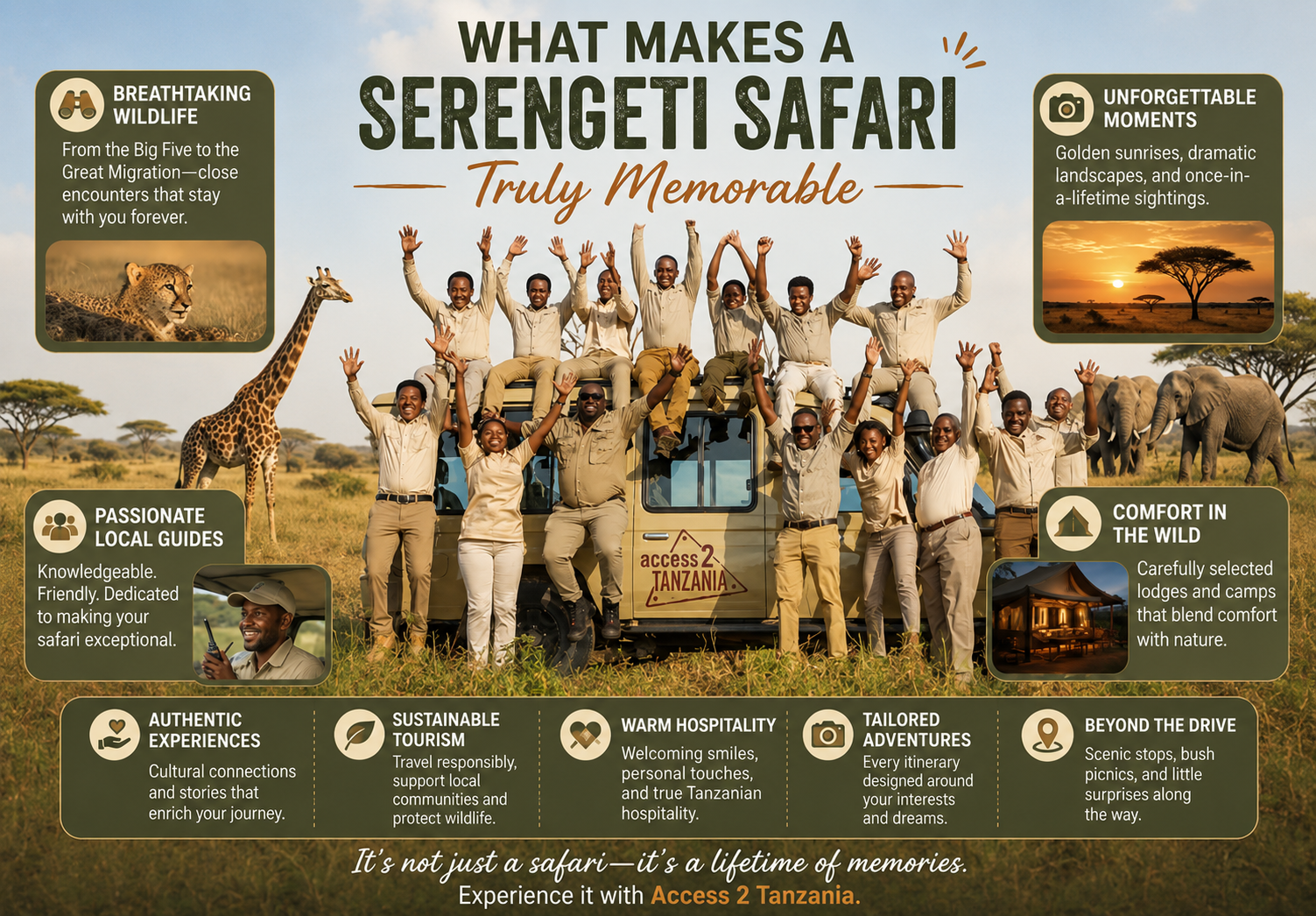
Why does the Serengeti feel different from other safari destinations?
The Serengeti feels vast because, well, it is vast. UNESCO describes the ecosystem as one of the oldest and also one of the most scientifically important systems on Earth. Migration routes, climate patterns, predator behavior… these things stay linked with the land for generations.
Still, the Serengeti’s emotional impact comes from more than just size. The park makes people slow down. Long drives create quiet pockets of time. Travelers start noticing in a different way. A storm far away matters, animal footprints matter, and silence matters too. That little shift changes the whole experience, completely.
When is the best time to visit the Serengeti?
There is no universal answer because the Serengeti changes throughout the year. The migration moves constantly across the ecosystem, following rainfall and grazing conditions.
We often explain the seasons this way:
| Time of Year | What Travelers Often Experience |
| January to March | Calving season and predator activity |
| April to May | Fewer crowds and greener landscapes |
| June to August | Dry season and river crossing movement |
| September to October | Strong wildlife viewing and stable weather |
| November to December | Short rains and quieter safari routes |
Many travelers assume they must visit during migration crossings only. That belief overlooks quieter experiences that can feel equally powerful.
During green season months, we often see:
- Better birdwatching
- Softer landscapes
- Fewer vehicles
- Longer wildlife observation opportunities
- More relaxed camp environments
Those conditions appeal strongly to photographers and repeat travelers.
How do local guides shape the safari experience?
Local guides kind of shape the whole safari experience, even if you don’t notice it right away. They handle timing and the reading of what’s happening, also safety, and that traveler energy that gets stretched during those long days. But the real thing is, they turn the landscape into something you can actually get, like a quiet translation that you feel in your chest, not just your eyes.
A skilled guide notices:
- Fresh animal tracks
- Shifts in bird behavior
- Weather patterns
- Predator movement
- Road conditions
- Animal stress signals
That kind of awareness does not really show up in most marketing materials. It just sits there, behind the scenes, and it ends up defining the safari quality.
Our connection to Project Zawadi also changed how we view guiding. We learned that local knowledge deserves long-term investment and respect. Good safari guiding depends on trust, experience, and continuity.
What mistakes do first-time Serengeti travelers often make?
Many travelers try to see too much too quickly. The Serengeti cannot be rushed comfortably.
Thus, we encourage visitors to avoid things like overpacked plans, unrealistically tight driving schedules, or constantly switching lodges as if everything is interchangeable. Also, chasing every wildlife report as soon as it pops up, and ignoring seasonal conditions.
A slower safari often creates stronger memories. Travelers notice more when they stop treating wildlife viewing like a competition.
Why does education remain connected to our safari work?
Project Zawadi shaped how we understand tourism’s role in Tanzania. Education and travel may seem unrelated at first, but they connect through opportunity.
Tourism supports:
- Local employment
- Guide training
- Regional businesses
- Conservation funding
- Community infrastructure
When travelers engage thoughtfully, tourism becomes part of a larger ecosystem rather than a separate industry.
That belief continues to shape how we approach Serengeti National Park Safari Tours today.
How should travelers prepare emotionally for the Serengeti?
Most travelers prepare with packing lists and camera equipment. Few prepare emotionally for the scale of the experience.
The Serengeti often creates unexpected feelings:
- Humility
- Patience
- Awe
- Discomfort
- Reflection
- Curiosity
Some visitors expect constant excitement. Instead, they discover long stretches of quiet observation. Those moments often become the most meaningful parts of the trip.
The landscape teaches patience naturally.
What stays with travelers after the safari ends?
People remember wildlife, but they also remember conversations, guides, camp staff, and local interactions. They remember how the land felt at sunrise or how silent the plains became after dark.
That emotional layer shapes how we think about the Best Serengeti Safari Tours. We believe the strongest safaris combine wildlife, local understanding, and thoughtful pacing. The role of experienced Serengeti Safari Tour Operators is not simply moving travelers between sightings. It is helping people understand the place itself.
Today, Access 2 Tanzania continues building safaris around that philosophy. Our work remains connected to Project Zawadi because we believe Tanzania’s future depends not only on tourism growth, but also on education, relationships, and long-term community investment.
FAQs
- What is the best month to visit the Serengeti?
The best month depends on travel goals. June through October offers dry conditions and strong wildlife visibility. January through March attracts visitors interested in calving season. Green season months provide fewer crowds, softer scenery, and different photography opportunities. - How many days should travelers spend in the Serengeti?
Most travelers benefit from spending at least three to five days in the Serengeti. Longer stays reduce travel fatigue and improve wildlife viewing opportunities. Extra time also allows flexibility when weather, migration movement, or road conditions change unexpectedly. - Are Serengeti safaris safe for first-time travelers?
Licensed safari operators follow established park regulations and safety procedures. Professional guides manage wildlife viewing distances, driving routes, and camp logistics carefully. Travelers should still follow guide instructions closely and respect wildlife boundaries throughout the experience. - What should travelers pack for a Serengeti safari?
Travelers usually pack lightweight neutral clothing, layers for cool mornings, sun protection, binoculars, cameras, medications, and comfortable footwear. Dust protection is also helpful during dry months. Soft-sided luggage works better than hard suitcases on smaller safari vehicles and flights. - Why do many travelers combine Serengeti safaris with other destinations?
Many itineraries include Ngorongoro, Tarangire, Zanzibar, or Kilimanjaro for variety and balance. Combining ecosystems creates a broader understanding of Tanzania’s geography, culture, and wildlife. Travelers often appreciate mixing intense safari days with quieter cultural or coastal experiences.

“Access 2 Tanzania provide excellent service from the initial inquiries to returning home with unforgettable memories. The planning process felt very collaborative and productive. All participants were heard and had their questions answered. The choices of lodging and flow of the entire trip were comfortable and met all of our goals. Our group felt very supported and safe throughout the adventure. Because we were familiar with many other’s experiences, we had extremely high expectations and not only were they met, but were exceeded! Thank you to Karen and staff for the planning and guidance.”